01
Amtsknechthaus
Court clerk's residence
Prisoner's quarters (17th century)
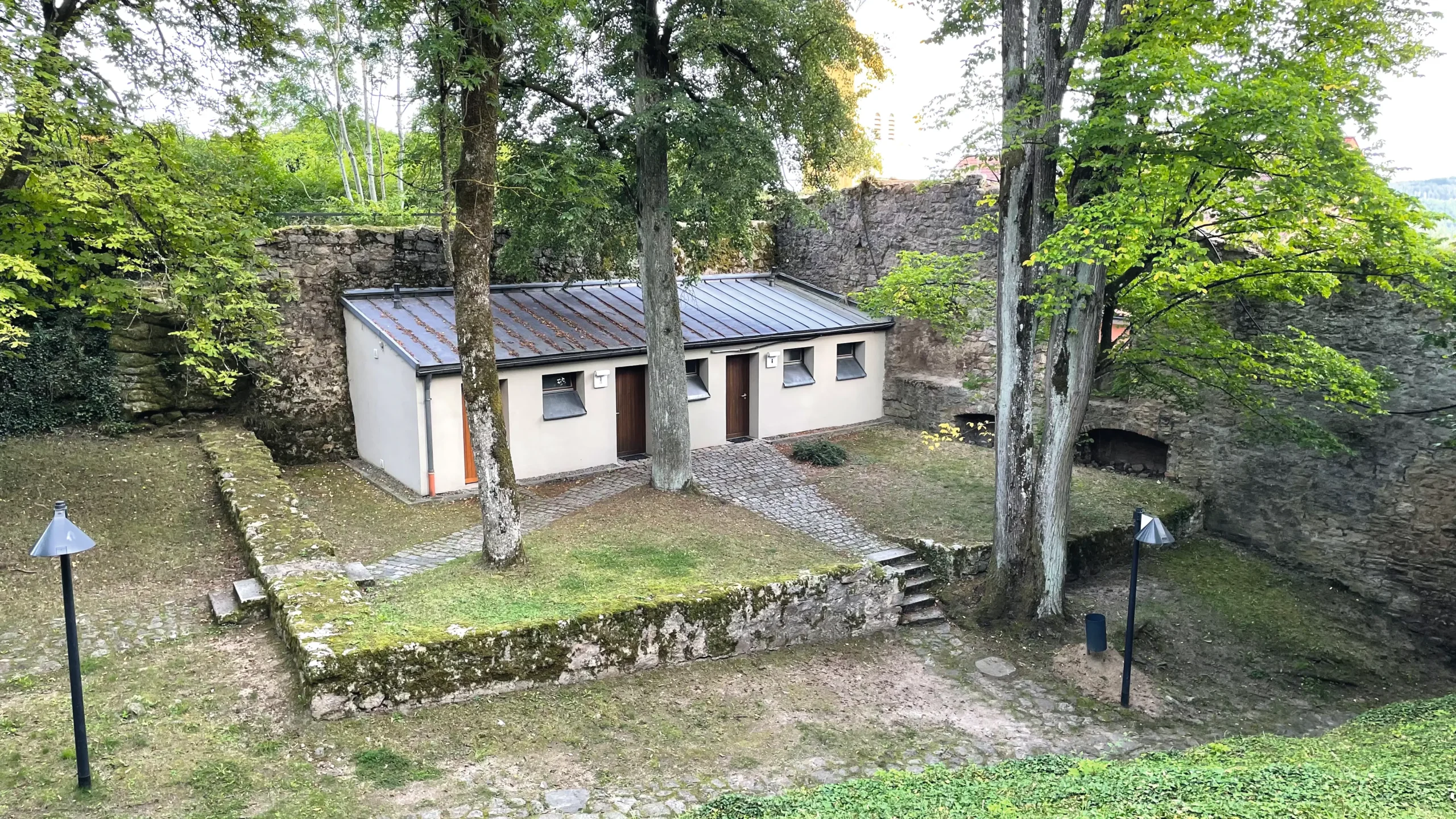
Toilet facilities (since 1982)
The Amtsknechthaus, that is, the residence of the court clerk, was one of the buildings located in front of Burg Leuchtenberg and protected by an enclosing wall. In addition to the Amtsknechthaus, these included the Rentamt and the granary. Even today, the path from the market town of Leuchtenberg leads through a large pointed-arch gate onto the castle grounds. Of the formerly second and third gates that also had to be passed, hardly anything remains today; the second was located at the level of the cellar, while the third—most recently situated at the masonry entrance to the tournament ground—has completely disappeared.
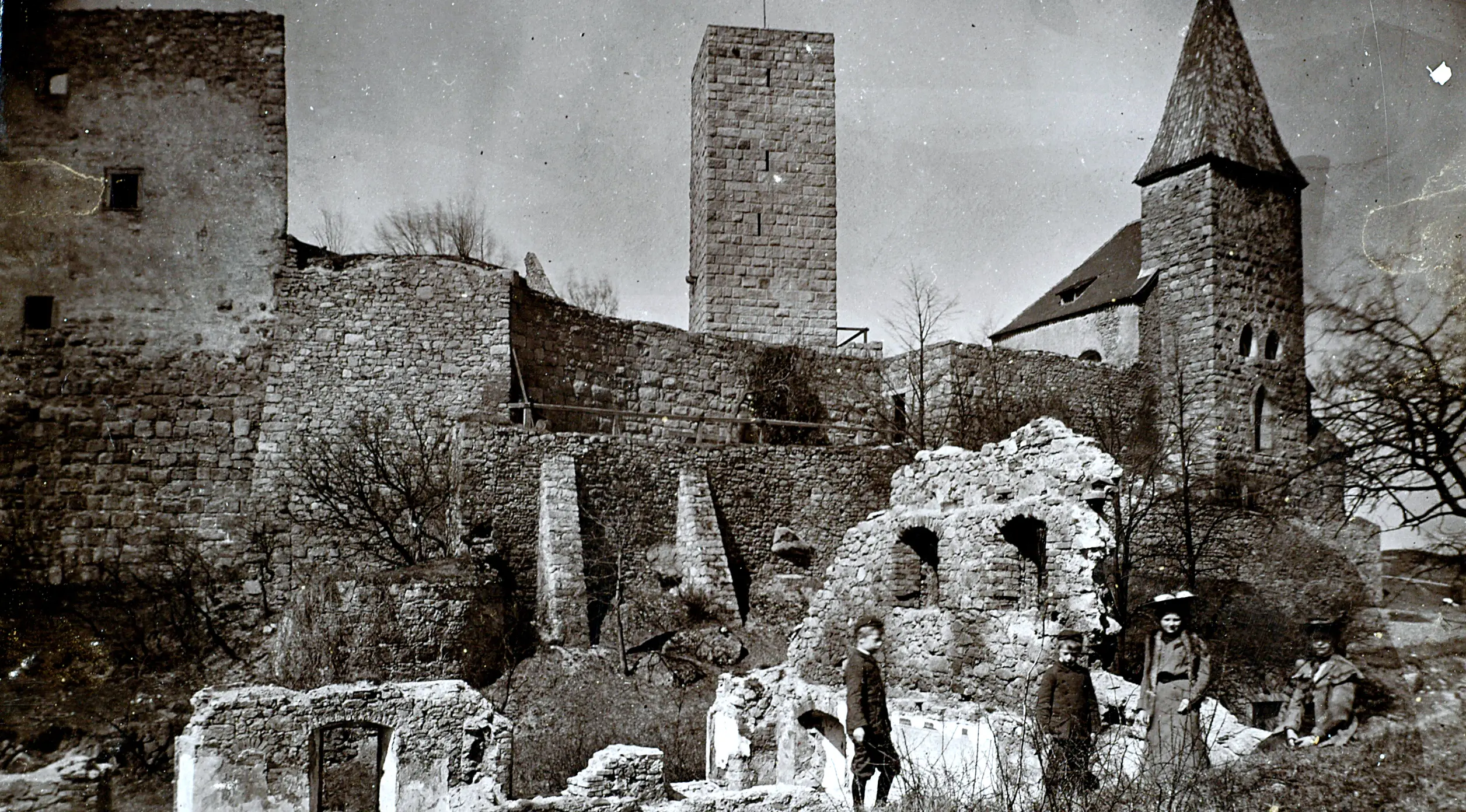
The foundation walls and the size of the former Amtsknechthaus are still clearly recognisable today. Originally, the building was part of the agriculturally used facilities of the castle, but it was later converted into a residence for the Amtsknechte, that is, the official administrators or court assistants of the district judges of Leuchtenberg. Its status as official accommodation remained until the outbreak of the Swedish War.
In 1621, during the Thirty Years’ War, the market town of Leuchtenberg was set on fire, and the buildings of the outer bailey—including the Amtsknechthaus—were plundered and largely destroyed. After the devastation, reconstruction followed: the new Castle was built, and the residences of the district judges and administrators were relocated to the inner castle, which had remained unscathed by the war. During this period, the Amtsknechthaus was used as accommodation for prisoners. For additional security, another gate was constructed between the court servants’ house and the new Castle.
Around the year 1862, the Amtsknechthaus was owned by the merchant Agler. The last owning family, Lengfelder/Lindner, was bought out by the Free State of Bavaria in 1898 during the major castle renovation. As was customary at the time, they were allowed to demolish the house themselves, a fact documented in historical photographs. Since 1982, a public toilet facility has been located on the site of the former building.