09
Palas’ Lobby
Also called triangular room
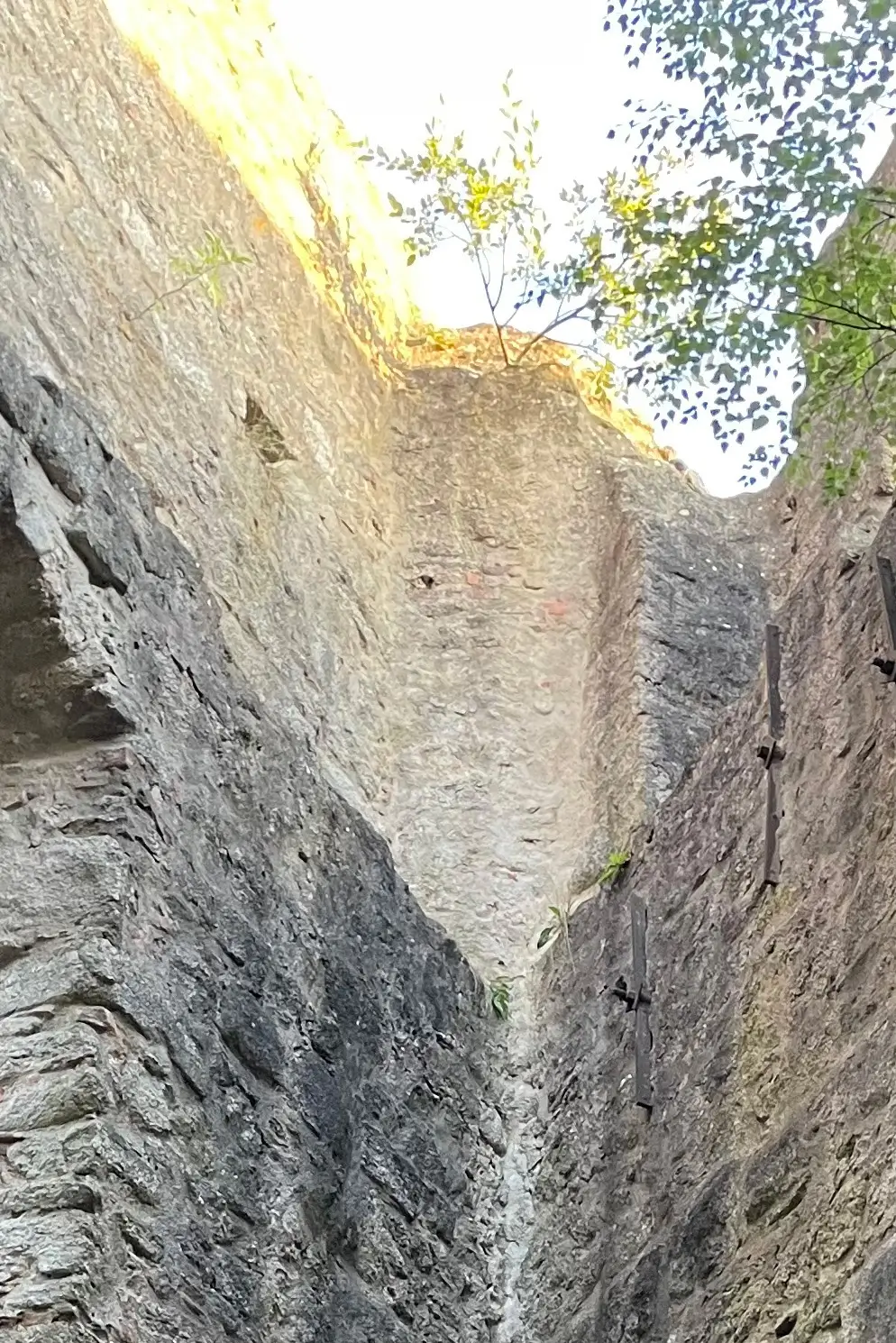
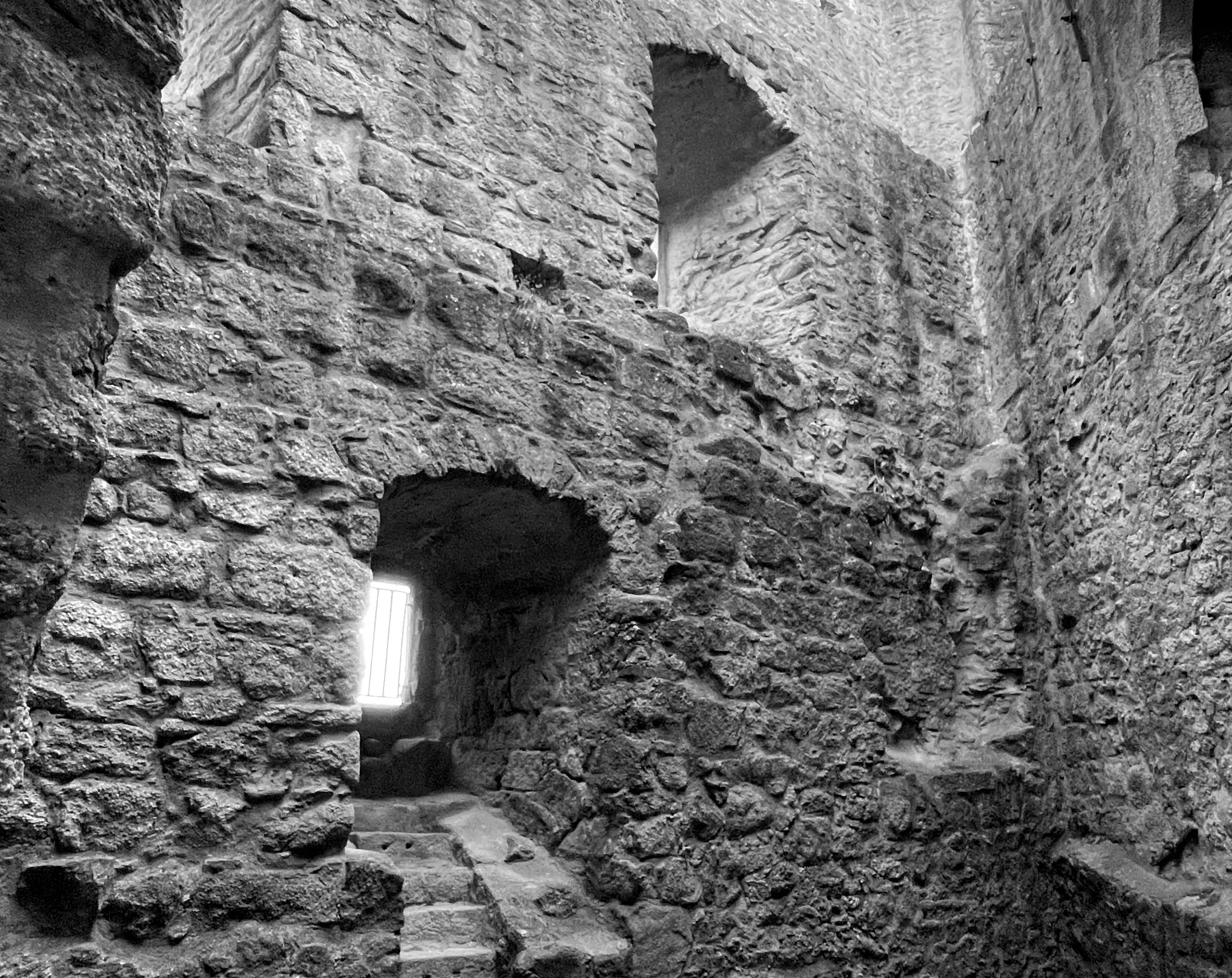
The so-called antechamber of the palas, also known as the triangular room, is a later extension dating from the 15th century. Its unusually triangular shape results from the local ground conditions. The extension was originally four storeys high, as evidenced by the former wall joints that are still visible today. Today, the cellar level—filled with rubble—is entered through the broken-out former doorway. Since around 1780, the structure has been in a state of decay.
In the rear part of the four-storey extension were once the rooms of the servants, while in the front section a spiral staircase providing access to the palas was presumably installed. According to an old tradition, a noble maiden was walled in alive in this room. According to legend, many centuries ago the daughter of a landgrave lived at Burg Leuchtenberg. Her mother had died early, and her father watched carefully over the young girl. One day, however, he had to go to war. Before his departure, he said: “Stay close to me, and nothing will befall you. But as long as I do not return, you must not leave these castle walls.”
Summer passed, autumn brought falling leaves, winter came icy and cold, yet the father did not return. When spring finally arrived, on a day so sunny and warm, the noble maiden forgot her father’s command. She secretly left the castle, wandered across blooming meadows, crossed the little stream in the valley, and climbed up the hill. There, beneath a mighty linden tree, sat a shepherd watching his flock grazing on the slope. She sat down beside him, unaware that her father, returning at that very moment, appeared on horseback above. When he saw his daughter with the shepherd, he believed it to be a betrayal and immediately held court. The innocent shepherd was sentenced to death and hanged on the spot beneath the linden tree.
The noble maiden, however, was forced to return to the castle and was walled in alive. Only a narrow slit remained open, through which she could still look out at the tree. With her last strength, she uttered a curse: “May you always remain as cold as my father’s heart.” Since that time, so the tale goes, a cold wind always blows around the linden tree, and its leaves move incessantly, as if the tree itself were retelling the gruesome legend forever. Therefore, it bears the name “Cold Tree” to this day.