07
Chapel
First mentioned in 1124 at the inauguration
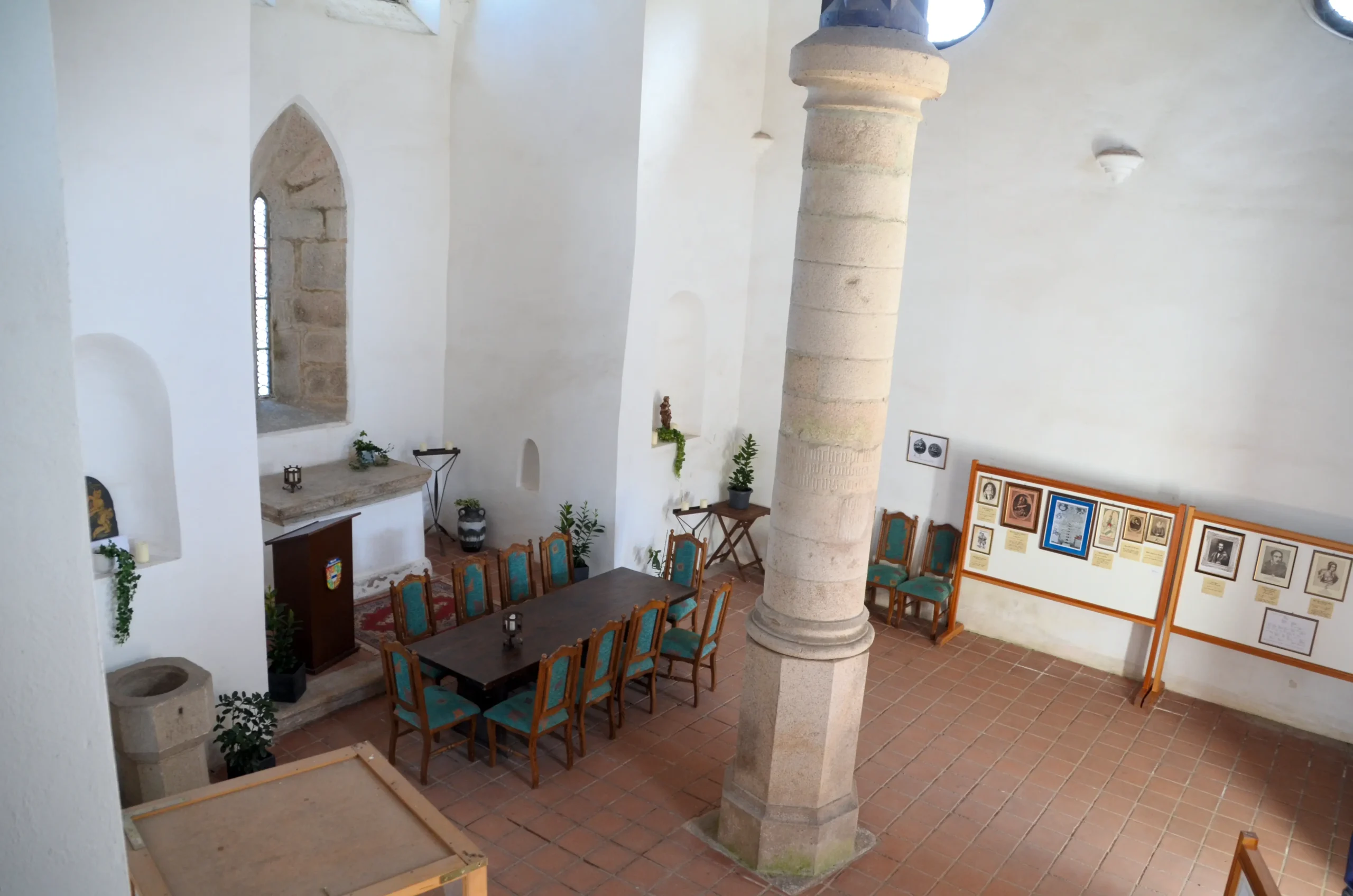
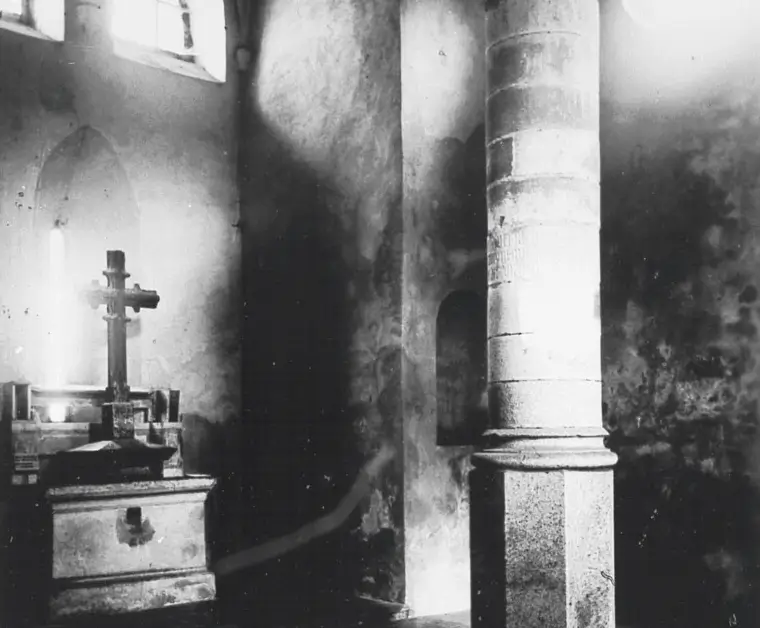
The chapel was first mentioned in 1124 at its consecration by Saint Bishop Otto of Bamberg, at the request of the noble Lord of Waldeck, Gebhard of Leuchtenberg. Originally, it was a very small and dark chapel. Today, it forms the central focal point of the entire castle complex. The castle chapel is not a uniform structure but was built in two different Gothic periods. The choir belongs to the first Gothic construction phase of the 14th century, while the nave dates back to a comprehensive renovation in 1440 under Landgrave Leopold of Leuchtenberg. A minuscule inscription on the stone block of the central column still bears witness to this renovation today. Choir and nave were originally spanned by a rib vault resting on a round central pillar and on corbel stones in the walls. In the choir, the vault is still clearly recognisable, as are the corbel stones in the nave.
In the first half of the 19th century, the vault became structurally unsound, and during the fire of 1842, which also affected the roof structures of the chapel and the tower, the delicate pointed-arch vault could not be saved. After the secularisation in 1803, the chapel had already been desacralised and offered for sale. The high altar was destroyed; the side altar made around 1730 by the court clerk Horn, featuring an image of Saint Walburga, was donated to Wittschau; the pulpit was sold to Waidhaus; the church pews were handed over to a carpenter; the two bells were sold to Hohenthan near Tirschenreuth; and an allegedly very old chalice was confiscated. As no buyer could be found, the building ultimately served as a wood storage facility for the rent officials.
During the reconstruction in 1902/1903, the chapel received a coffered ceiling and a newly paved floor. The sacristy and gallery were presumably added only in the 17th or 18th century, as were the new, light-admitting ox-eye windows. Another remarkable feature is the zwinger added on the north side in the 15th century, that is, the area of today’s sacristy, where loopholes set into the outer wall are still visible. Originally, a gallery for the ruling family can be assumed above the western chapel entrance.
After its secularisation in 1803 and subsequent restorations, the castle chapel has been back in use since 1989 and serves the market town of Leuchtenberg as a registry office wedding venue for civil marriages. Today, it is a popular location for both civil and free wedding ceremonies.