10
Palas
Residential building of the lord of the castle and his family
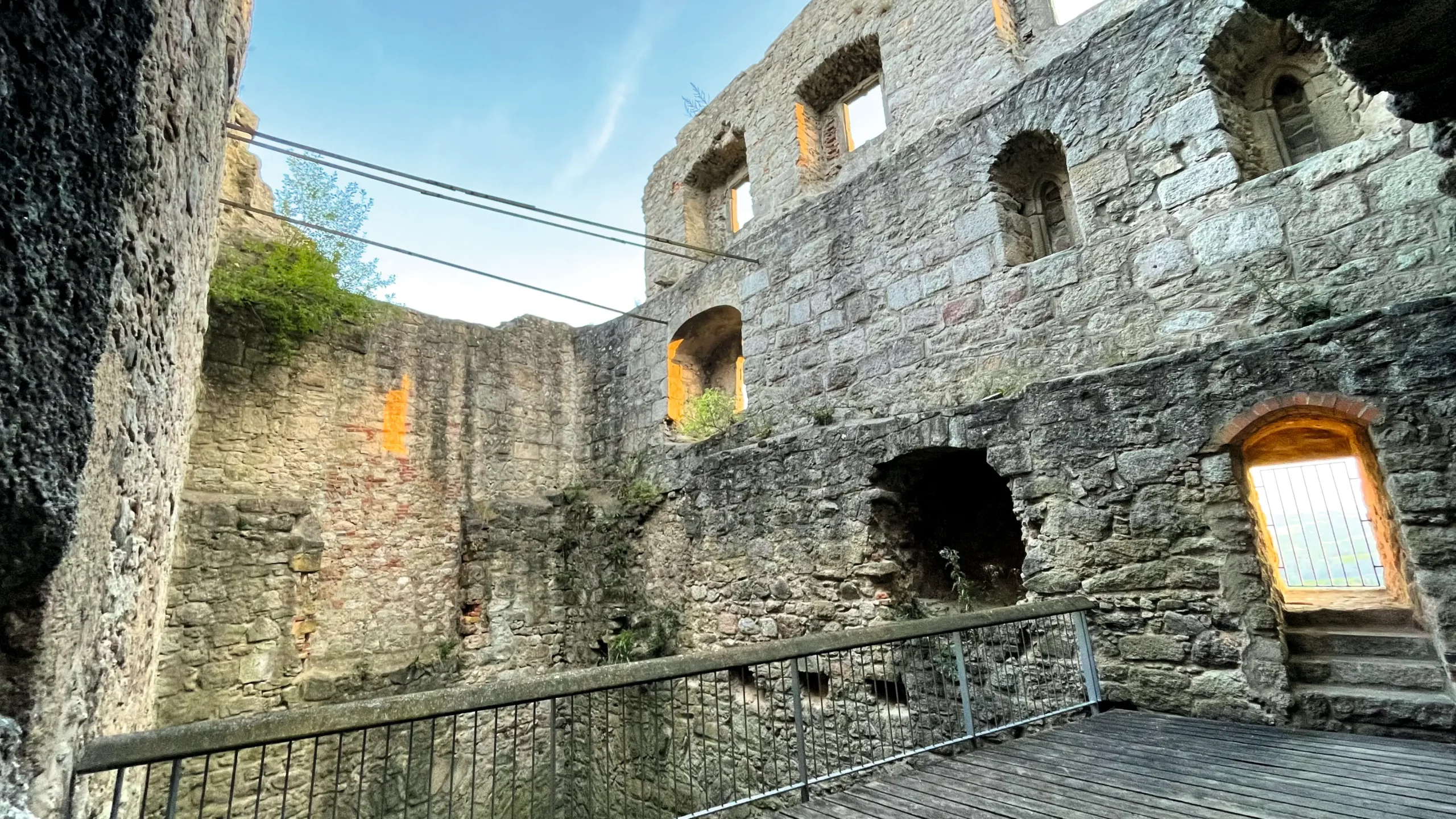
The palas was the most representative residential building of the castle and served as the living quarters of the lord of the castle and his family. It was erected on the least exposed side of the castle, on the courtyard side with the most sheltered and storm-protected area. Its irregular, trapezoidal ground plan resulted from the structural conditions of the site.
The palas ruin, including the cellar level, rises four storeys high. Each storey measures approximately eight feet in height, with the uppermost measuring only six. On the ground floor, in the western wall, there is a barred opening with a corbel stone, which likely served as an aborterker, that is, a toilet.
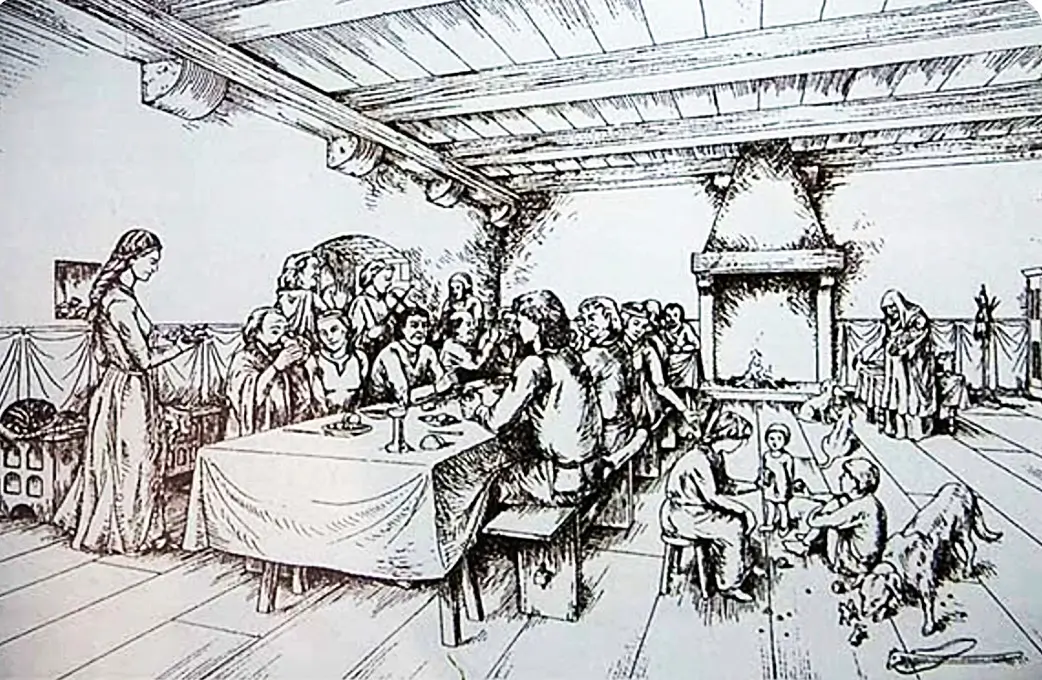
The most important room of the palas was located on the first upper floor: the great hall, which occupied the entire storey. It served as a living, social, and dining room, as well as for all daily activities. Here, guests were received and festive banquets held. It is assumed that a small passageway was integrated; the walls were decorated with ecclesiastical frescoes, and an ornate 15th-century window provided additional embellishment. Pointed-arch windows were located in the northern and western walls, while the southern wall featured a wide, walled-up opening with three corbel stones. At this spot once stood a broad oriel, built in the 15th century under Count Palatine Leopold and removed again around 1820. Through this oriel, a magnificent view to the south once opened up. The second upper floor housed the sleeping quarters of the lordly family. Here, rectangular windows with central mullions can be found, as well as a larger walled-up opening with corbel stones on the outer wall.
In 1440, the entire palas building was renovated and reinforced. Evidence of this can still be seen today in the corner ashlar on the western outer wall. During this construction phase, a double wall was built around the entire exterior wall, and the second upper floor was renewed. Since 1720, the palas has been left to weather-related decay.