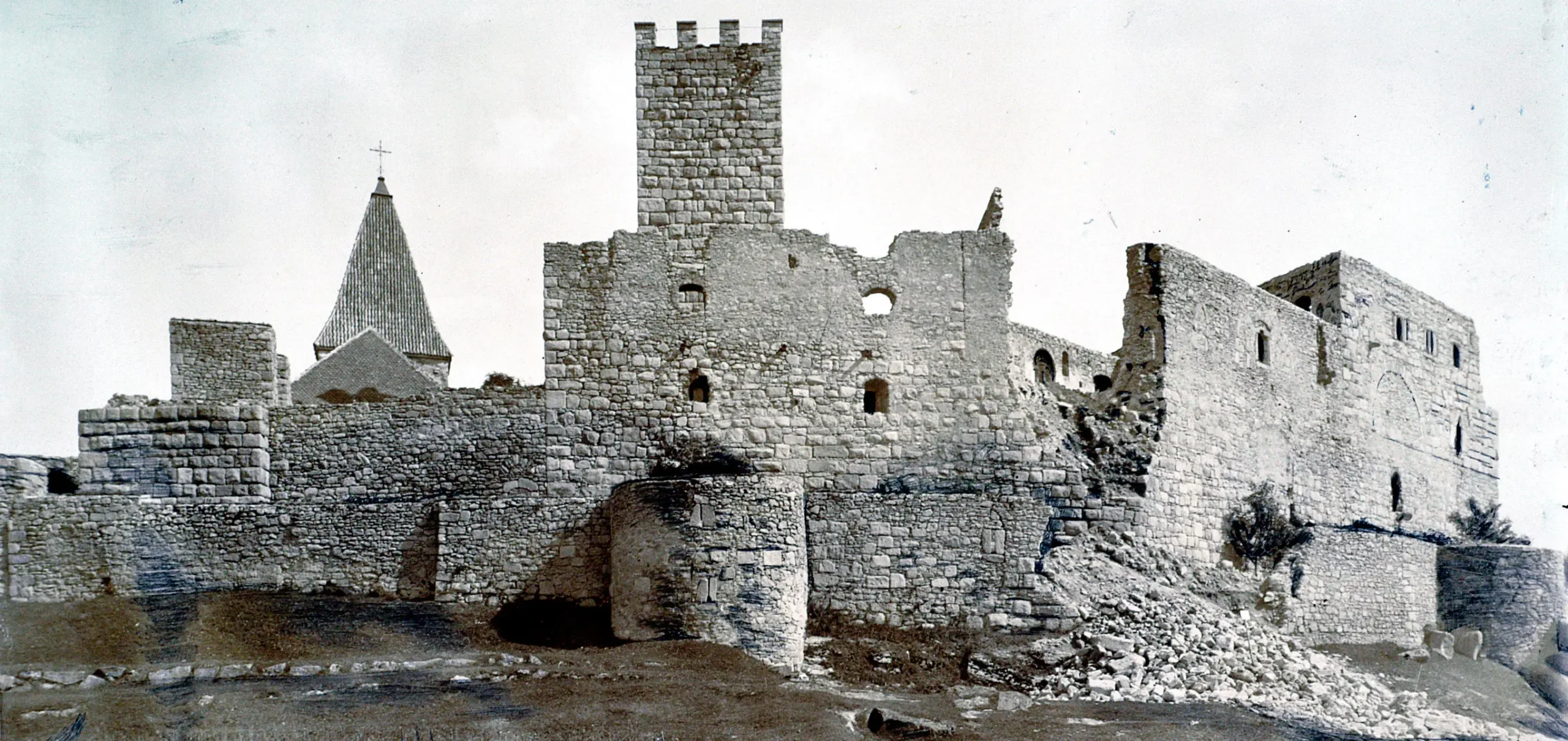
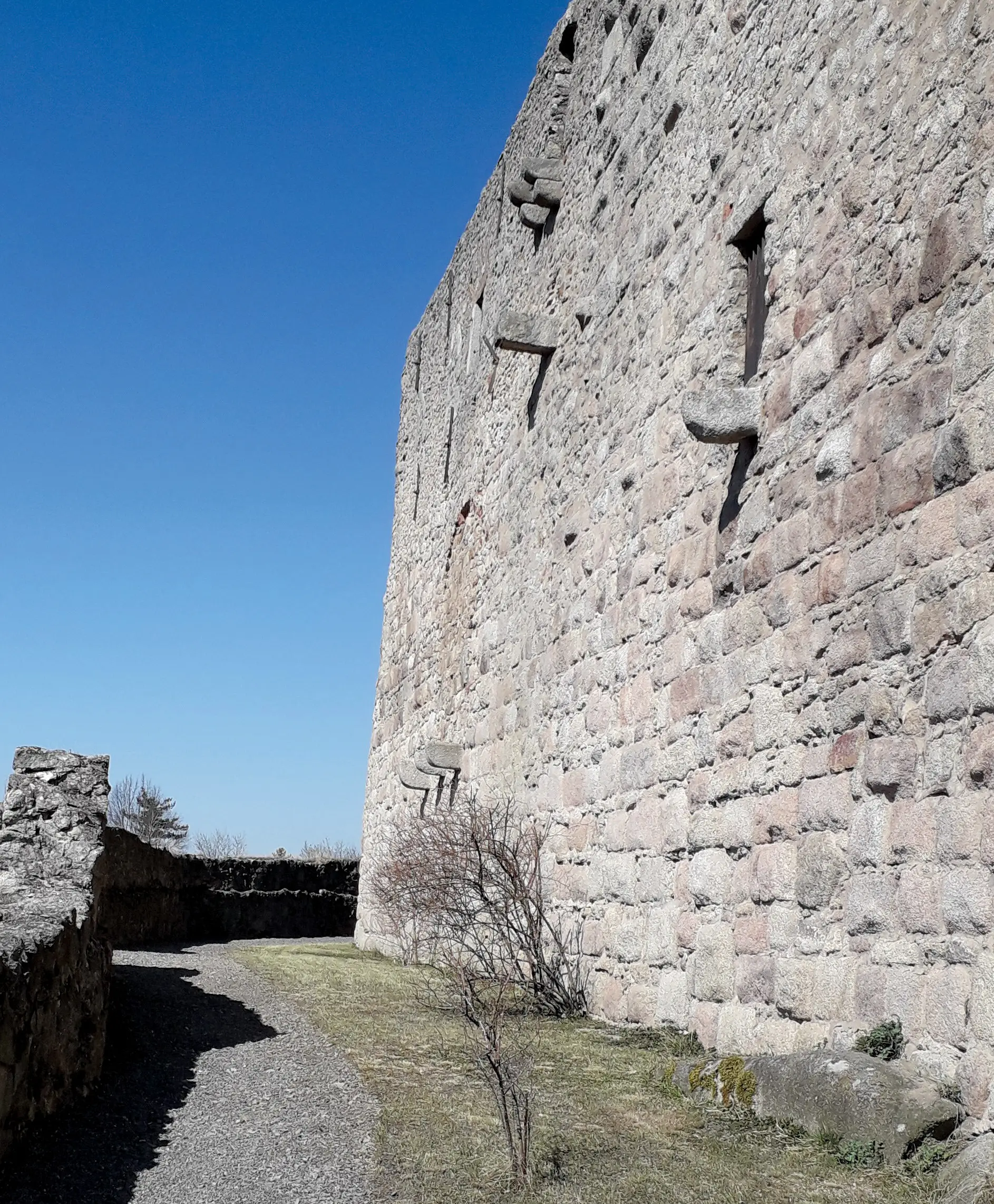
The Zwinger was added to the castle complex in the first half of the 15th century, around 1440, as an additional defensive wall. It runs in a ring around the inner castle and forms a defensive system with four shell towers and loopholes. This area served as a protective buffer, enabling defenders to combat attackers before they could reach the inner walls of the core castle.
Originally, a covered wall-walk ran along the then higher zwinger wall, as evidenced by the still visible masonry offset. The passage enclosed the entire inner castle, including the palas and the triangular room, and extended as far as the shell tower that now stands alone. From there, a stone staircase led further to the final section of the wall-walk and to the customary entrance into the castle, the area of today’s herb garden. This entrance was frequently used by the servants of the castle lords, as the main gate remained closed most of the time.
In 1802, part of the zwinger wall collapsed, a fact that can be seen in a photograph from 1897. In 1902, the reconstruction of this outer wall began. Today, the ground level is approximately 1.5 metres higher than originally, as large quantities of fire debris remained in this area after the great fire of 1842.